
Mobile Application Development
iOS, Android, and cross-platform apps users actually keep.
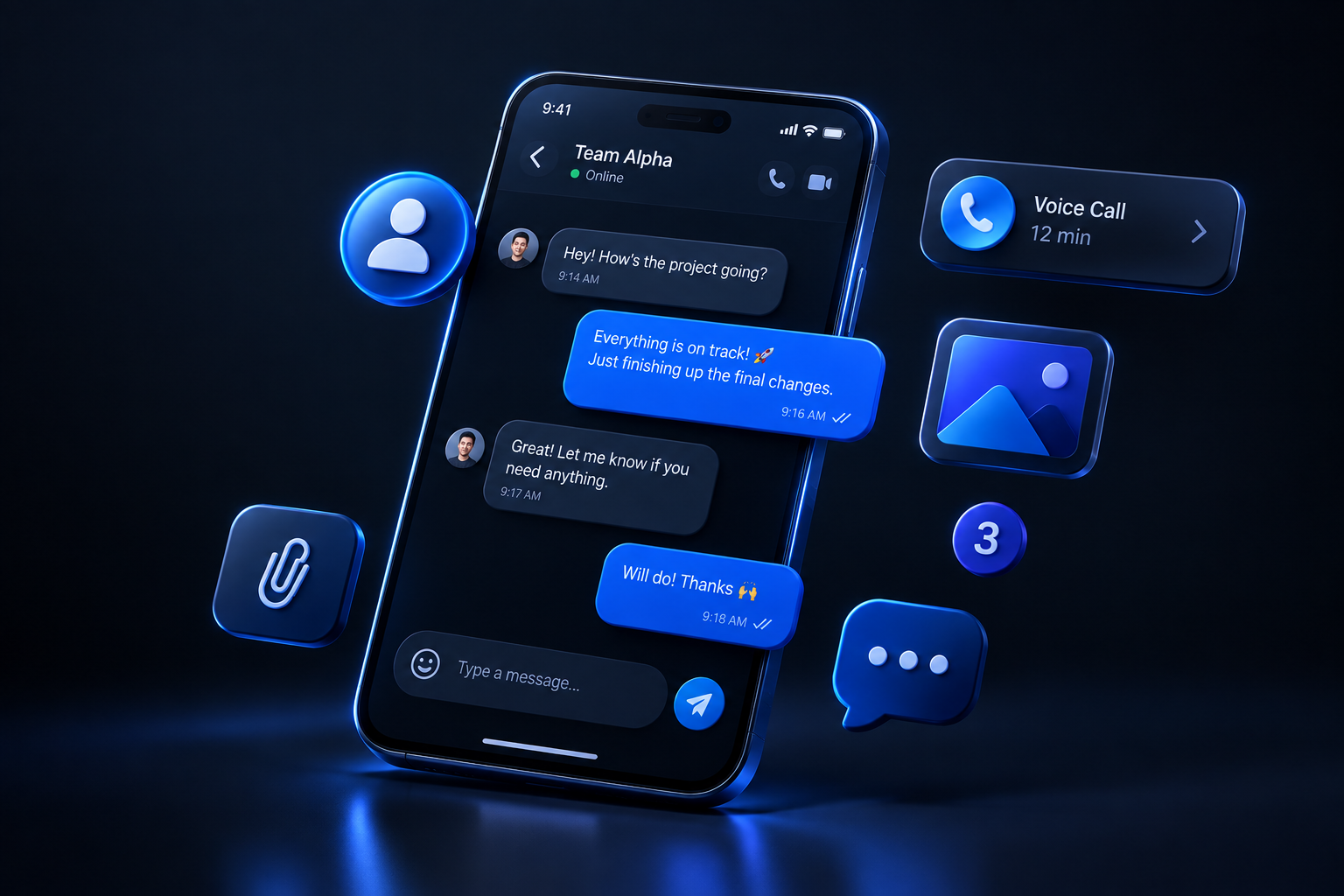
Mobile is where a huge share of digital revenue happens, and the market is enormous. But most apps lose users fast, retention hinges less on the framework than on quality: fast startup, low crashes, and a strong first run. We build for that, on the right stack for your goals.
Choosing the wrong stack, or shipping an app that crashes and confuses, burns budget and users. We help you decide native versus cross-platform on real criteria, then build a fast, reliable app that earns its place on the home screen.
developer share of Flutter and React Native, near parity among cross-platform frameworks.
Stack Overflow Developer Survey, 2024How we cover it, end to end
Native iOS & Android
Swift for iOS and Kotlin for Android when you need maximum performance, platform depth, and hardware access.
Cross-platform
Flutter and React Native to ship iOS and Android from a single codebase, faster and more cost-effective for most business apps.
Quality & retention engineering
Fast cold-start, low crash rates, and a strong first-run experience, because retention is a quality problem, not a framework debate.
How it works, step by step
From stack decision to store: designed for the first run, built native or cross-platform, and tuned for retention.
Define & choose stack
Native vs cross-platform
Design UX
First-run, offline-first
Build
Swift / Kotlin or Flutter / React Native
Test & harden
Crashes, performance, devices
Release & iterate
App Store / Play, retention
Concrete, not slideware
- 01
Choose native or cross-platform on performance, hardware, budget, and time-to-market
- 02
Design for the first 30 seconds and the first 30 days
- 03
Build with a shared design system and CI for mobile
- 04
Instrument crashes, cold-start, and retention from day one
Outcomes we hold to
- Reach on both iOS and Android
- Faster time-to-market and lower cost with one codebase where it fits
- Users who stay past the first session
- Store-ready quality and maintainability
Have questions?
Browse answers about Mobile Application Development and all our solutions.
More in Engineering
All solutionsLet us build what is next, together
Tell us about your goals and we will recommend a practical path forward.