

Most companies have more data than ever and use a fraction of it, while poor data quality quietly costs millions a year. The value is not another dashboard. It is a governed pipeline and a single trusted metric that turns data into decisions people act on.
When every team computes 'revenue' differently, trust evaporates and meetings become arguments about whose number is right. We fix the plumbing, pipelines, a governed semantic layer, and decision-ready analytics, so the business decides faster and with confidence.
expected streaming-analytics adoption by 2028, up from under 15%.
Gartner Top Trends for Data & AnalyticsHow we cover it, end to end
Pipelines & the modern data stack
ETL/ELT and dbt feeding a warehouse or lakehouse as one reliable source of truth.
Dashboards & BI
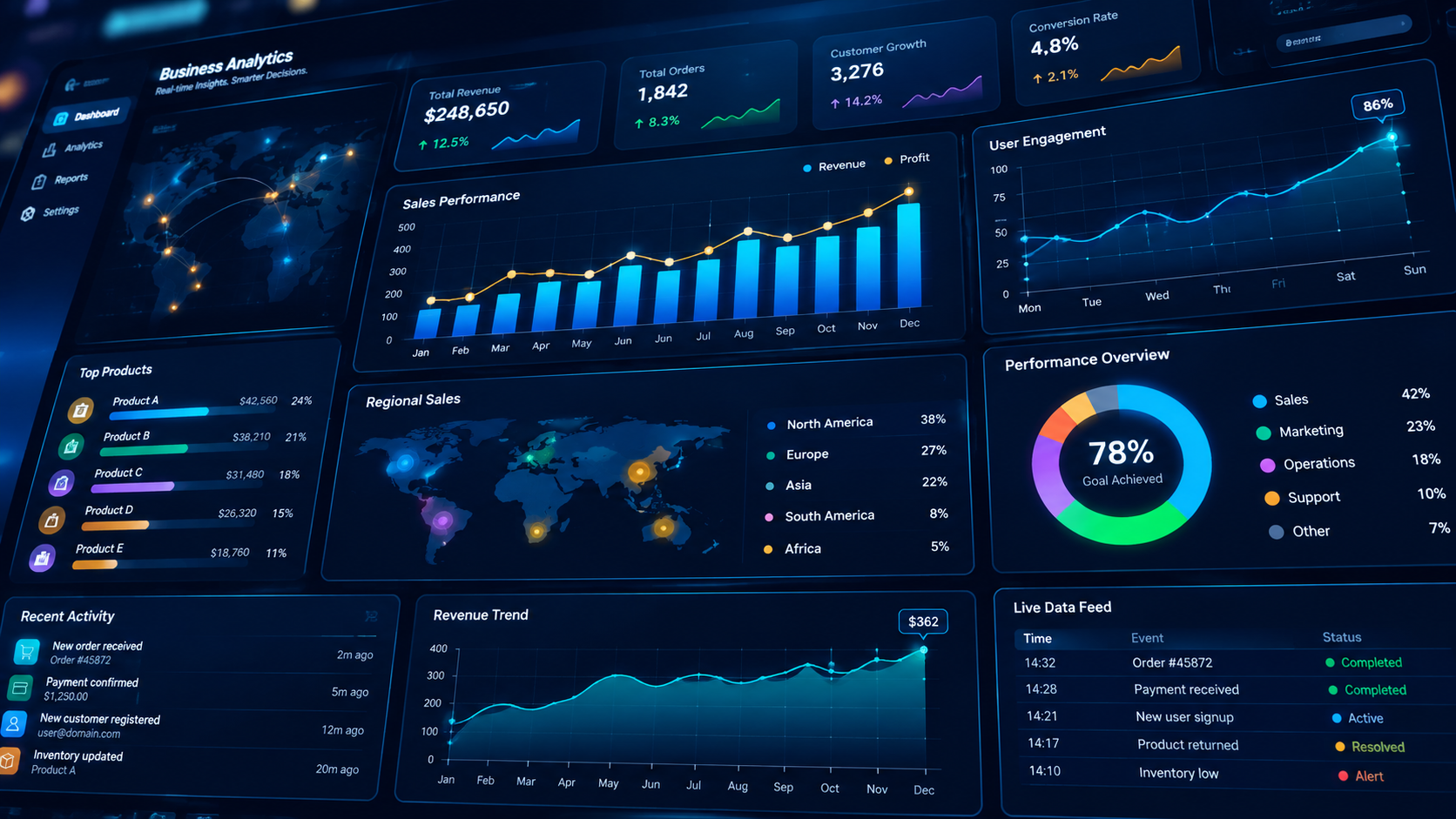
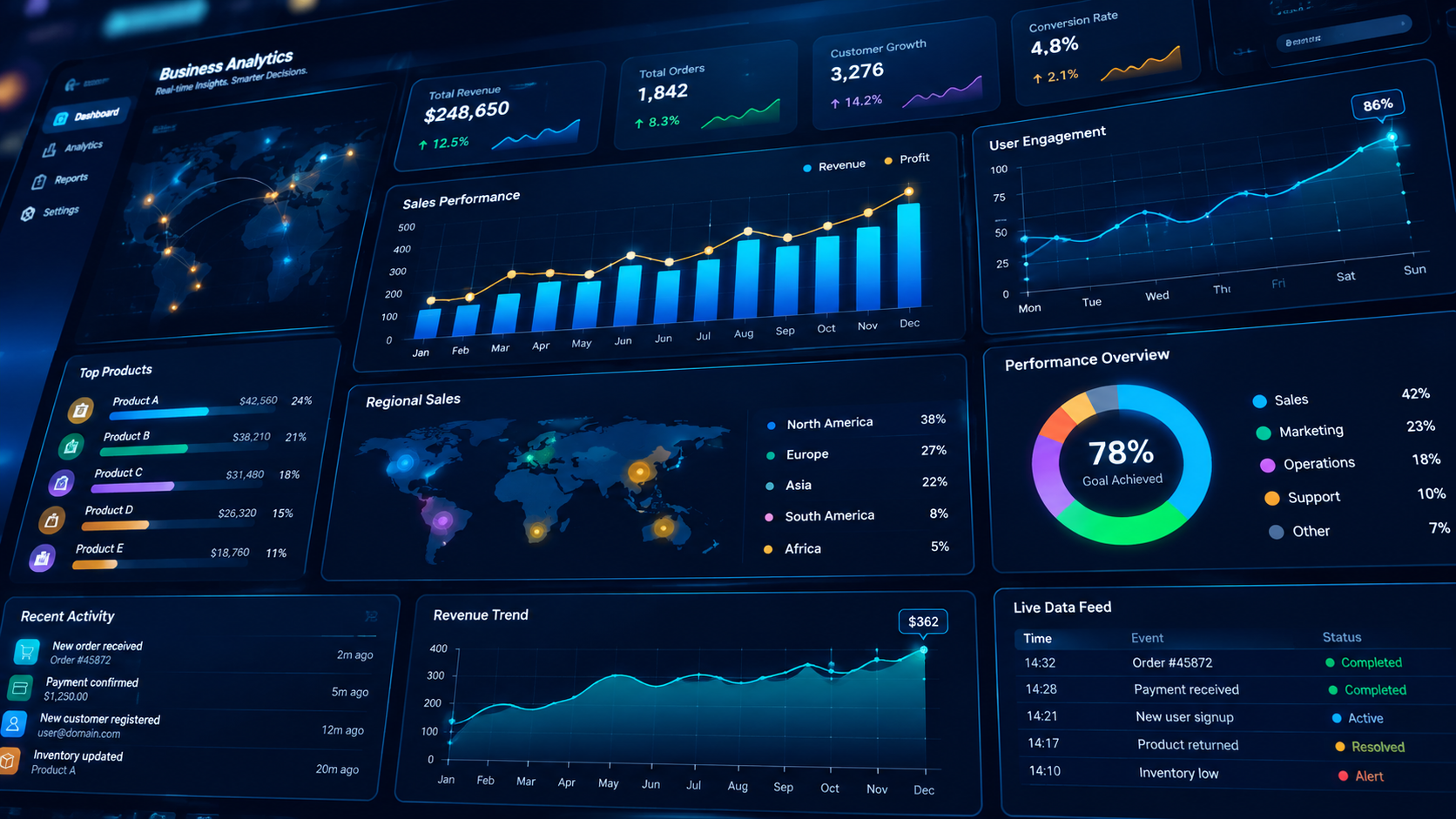
Trusted dashboards on a governed semantic layer, so everyone sees the same number for the same metric.
Decision intelligence
Connecting insight to repeatable, measurable action, and real-time streaming where seconds matter.
How it works, step by step
Plumbing first: ingest and model the data, govern the metrics, then visualize and decide on numbers everyone trusts.
Concrete, not slideware
- 01
Fix the pipeline and stand up a governed semantic layer first
- 02
Enforce data quality in code, before it reaches a dashboard
- 03
Choose batch or streaming per decision, not by fashion
- 04
Close the loop from pipeline to trusted metric to decision
Outcomes we hold to
- A single source of truth for your metrics
- Faster, evidence-based decisions
- Data quality you can actually trust
- Real-time insight where the decision demands it


Have questions?
Browse answers about Data Analytics and all our solutions.
More in Data
All solutionsLet us build what is next, together
Tell us about your goals and we will recommend a practical path forward.